
The HubbuyCN Spreadsheet is the wall you browse
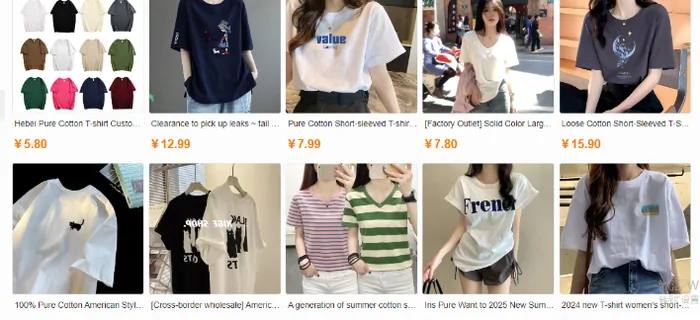
The HubbuyCN Spreadsheet is the catalogue people mean when they say they found something. It is a set of product cards you browse by category: a picture, a name, which marketplace the item sits on, and a link. The category links connect you with a product directory and its seller links.
It is not a document you download and it is not a file somebody shares with you. The name is a leftover from a decade ago, when communities really did trade finds that way. What survived is the word.
The catalogue is a starting point for discovery. Check the live listing and selected options before ordering.
The part people mix up
HubbuyCN and the HubbuyCN Spreadsheet are two different layers
These get confused constantly, and the confusion is expensive because it sends people to the wrong place with the wrong question.
HubbuyCN, and now Hubbuy, is the agent. It buys, stores, inspects, packs and ships. It takes your money and it answers for your parcel.
The HubbuyCN Spreadsheet is the catalogue. It shows what exists and hands over a link. It holds no stock, takes no payment, and cannot see your order.
The agent does not decide what appears in the catalogue. The catalogue does not touch your money. If your parcel is late, writing to the catalogue achieves nothing, and if a card is wrong, the agent cannot fix it.

What each part of a card is worth
Four things on a card, and they age at very different speeds. The link is the first to die, because sellers rewrite and delete listings constantly. The other three are what you search with when it does.
That is the practical reason this site spends its time on searching rather than on browsing. Browsing is easy. Rebuilding a dead card is the skill.
What the HubbuyCN Spreadsheet does for you, and what it will not
A catalogue is worth using precisely because somebody already did the search. It is worth distrusting for exactly the same reason.
Worth the detour
- Somebody found it in the marketplace wording, so you do not have to
- It is grouped by category, which is how you learn a price band
- The card names the source, so you know which rules apply
- It costs nothing to browse and needs no account
Do not expect
- Stock. Nothing here is reserved, and listings die
- Prices you can hold anyone to. They move on the marketplace
- A judgement on quality. A card is a pointer, not a review
- Coverage. Plenty of good things are simply not on it yet
Why use the spreadsheet rather than the search box
The HubbuyCN Spreadsheet is not a shortcut for people who cannot search. It wins on three specific things, and it loses on one. All four are worth knowing before you decide which way in to take.
You can browse it signed out
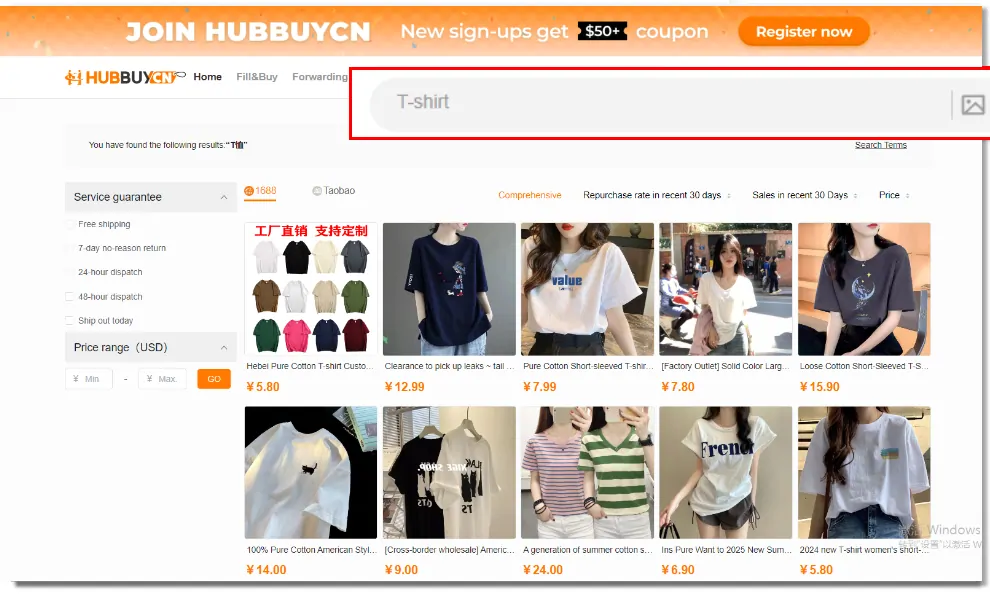
The platform search box accepts typing but sends you to a sign in when you press enter, which we reproduced twice on 4 August 2026. The catalogue has no such wall. You can look at what exists, at what things cost, and at what a category normally contains, before you decide whether to register at all.
Keep the seller link
A card exists because a listing was found and kept. That is a different starting point from a search, which can hand you a taken down listing, a wholesale lot or a machine translated title describing something adjacent. The card carries the marketplace it sits on, so you know which set of rules applies before you click.
Prices before commitment
Browsing a category tells you the normal price band for a thing, which is the context that makes a single listing readable. A search gives you one answer with nothing to compare it against, and the cheapest result is usually a different object rather than a better deal.
It cannot contain everything
No catalogue covers every item on every Chinese marketplace, and links do go dead when sellers close. When the thing you want is not on it, searching is the answer, and the sign in wall is then a real cost you have to pay.
What the card hands over
Click through from a card and you land on the item page, which is where the catalogue stops and the agent starts. The title stays in the seller Chinese, the price is in the currency you selected, and the colour and size options are the ones the seller wrote.
There is also a checkbox on that page. It states that products displayed for the shopping agent service come from third party platforms and are not sold by the operator, and that using the purchasing service means you accept that. It is worth reading once.
